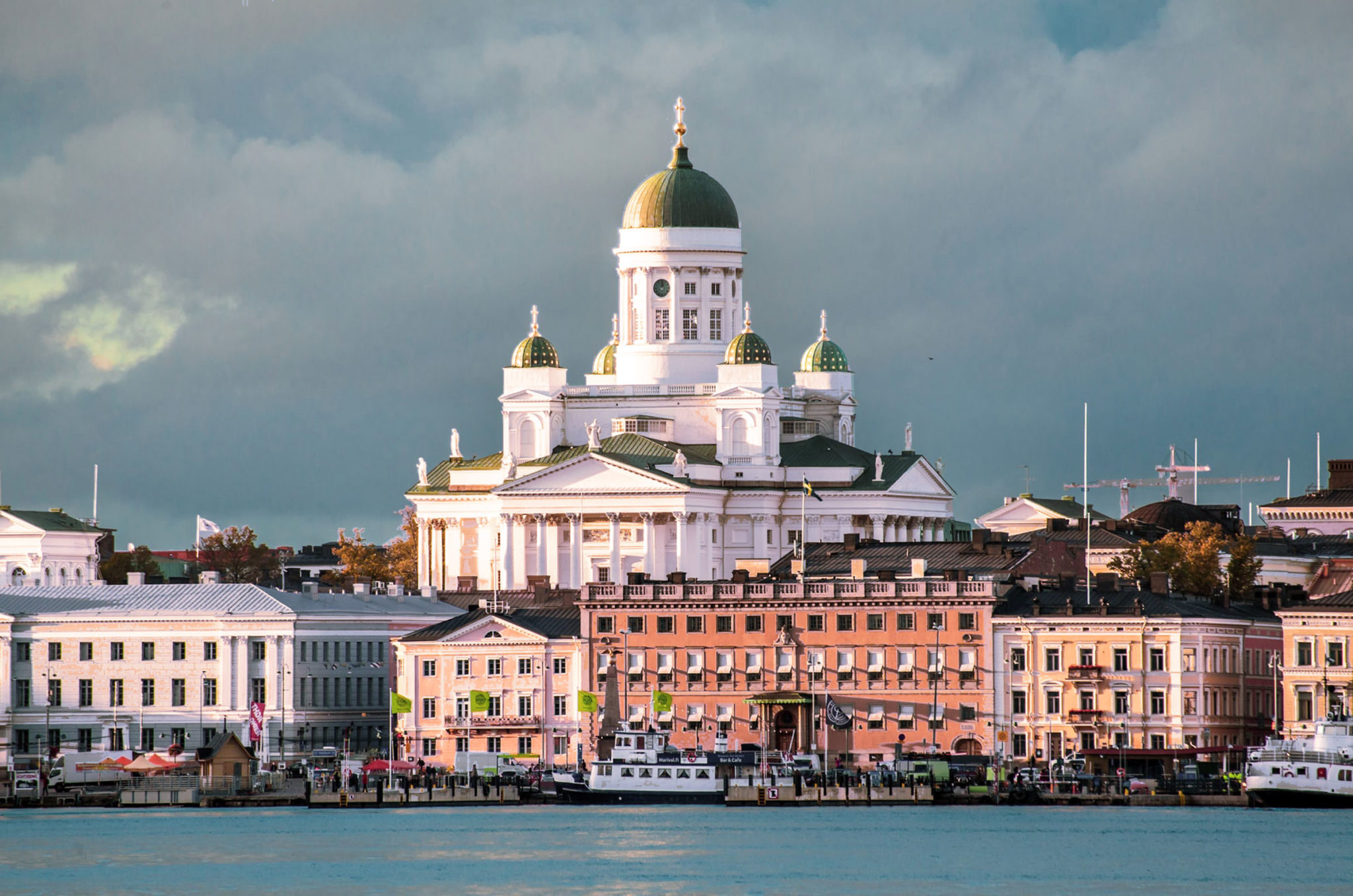
In your travels do you notice how well or how poorly cities are laid out? You don’t have to have a degree in urban planning to get a sense of whether a city’s landscape works well and WHO it works well for. As a big time walker and pedestrian in every location I visit, I always notice how friendly or unfriendly a city’s layout can be to both pedestrians and vehicles. Unfortunately, it often feels like it’s me, the pedestrian, against those folks driving cars.
Having recently spent time in Helsinki, I noticed that I felt more relaxed when walking and negotiating getting around the city. And then I came upon this statistic that helped me understand why.
Helsinki Had ZERO Traffic Fatalities
Helsinki, Finland went a whole year without a traffic fatality. Incredible, right?
And Helsinki claims it’s because of data-driven city planning.
Zero.
That is the number of people killed in traffic accidents in Helsinki during the last 12 months.
According to Roni Utriainen, a traffic engineer and road planner for the City of Helsinki, several reasons contributed to the success. Atop the list is the reduction of speed limits to 30 kilometers per hour (18.6 miles per hour).
“I think it is one of the key measures. Only reducing speed limits is not a sufficient measure, but it is still important,” Utriainen told DW.
Helsinki’s goal is for no traffic fatalities by 2050
Pro Tip: Do you Pruvo all your hotels stays? If not, do what I do and let Pruvo monitor your reservations for price drops. It’s free and it’s the easiest way to save money on all your hotel rooms.
Helsinki’s achievement aligns with the European Union’s “Vision Zero” program, which aims to reach as close to zero road fatalities as possible by 2050.
Helsinki wants to identify the most important routes for child, pedestrian and cyclist safety and rebuild its infrastructure accordingly. This involves reconstructing bike paths and street lighting, improving guidelines and networking with other cities and institutions.
According to Utriainen, increasing public transport use, which removes cars from the roads, is also a priority.
It’s smart to use data when tackling problems and issues as big and important as these.
When traffic planners understand how the city’s traffic works and where changes need to be made, data is key. It can also be used to plan street and pedestrian crossings, bike paths and public transportation.
More innovation, but also more implementation!
It’s important to innovate but also to implement.
Planners are convinced that Vision Zero is possible and think Helsinki’s efforts are a model for medium-sized cities.
Most cities that achieve achieve zero fatalities are smaller than Helsinki.
For other European cities, the challenge is overcoming local politics and opposition to road transformation.
If you have any interest in city planning and how cities really can make zero fatalities an amazing statistic, take a look at this article.
Over the past few years I’ve known two people who were killed in a traffic accident. One was on a bicycle and the other was crossing the street while walking his dog. Having this personal experience as well as having recently been a pedestrian in Helsinki, this article caught my eye.
Related Articles:
- My Favorite Travel Resources and Products
- Do you find it difficult to book award flights with your miles and points? I do! That’s why I turn to Point.me. They get me great deals and save me money and time.
- I Always Get the Lowest Prices on Hotel Rooms: Here’s How!
- 9 Awesome Travel Accessories To Pack for Your Next Trip
- Don’t miss out on the BEST current travel credit card offers!
The responses below are not provided or commissioned by the bank advertiser. Responses have not been reviewed, approved or otherwise endorsed by the bank advertiser. It is not the bank advertiser's responsibility to ensure all posts and/or questions are answered.